Menu

Return to Eapen Leubner.com. Find out more about the Denver Art Song Project. Buy recordings of the Denver Art Song Project.

Friday, April 7, 2017

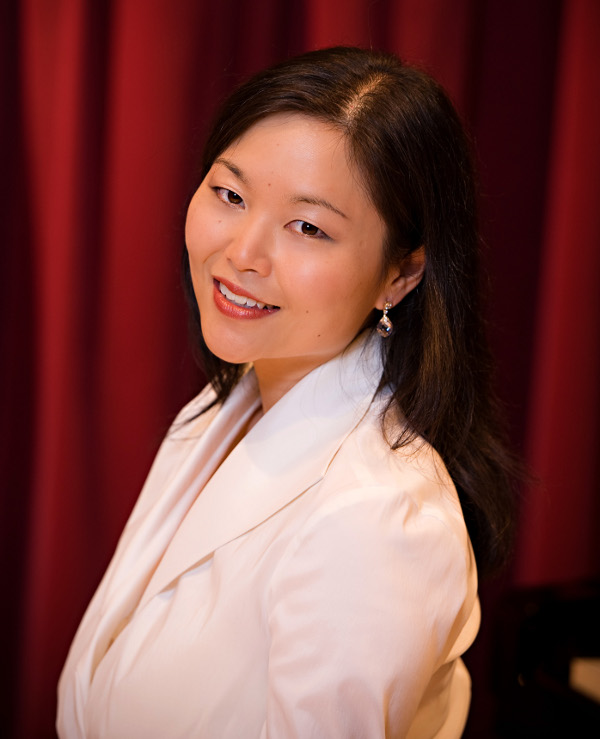
#artsongsforeveryone No.2 Rachael Hutchings

rach-scaled.jpg
Rachael Hutchings


Continuing our series of how art songs can touch many lives, meet pianist and composer, Rachael Hutchings!

Bio: Pianist and composer Rachael Hutchings’s recent performances have included solo piano recitals and collaborations with artists from around the country, featuring both standard classical repertoire and her own compositions. She appears regularly as a guest artist, visiting lecturer, and collaborative pianist.

Rachael's compositional style is at once expressive, approachable, and innovative. Recently, Rachael and her husband, tenor Daniel Hutchings, premiered two of her works on Colorado Public Radio. Her settings of poetry by Rilke for voice and piano were featured on CPR’s “Colorado Spotlight.” Other recent compositions include a setting of the Salve Regina text for SATB choir, the neo-Baroque Willow Suite for solo piano, and Diaphanous Tether for flute quartet. Her scores are available through Veritas Musica Publishing, www.veritasmusicapublishing.com.

Before arriving in Colorado in 2010, Ms. Hutchings was an active performer and music teacher in San Francisco. Ms. Hutchings served as an instructor at the San Francisco Community Music Center and adjunct professor of piano at the University of San Francisco. She has served as an adjudicator and administrator for various student music programs, as adjunct faculty at the University of Denver Lamont School of Music, and is on the faculty of the Lamont Summer Music Academy. Composition students from her private studio have gone on to top college composition programs.

Ms. Hutchings began studying piano in her hometown of Iowa City, Iowa. She earned her B.M.A. in piano performance at the University of Michigan School of Music, and completed a master of music degree in composition and piano performance at the University of Denver's Lamont School of Music.
Links:
Website

Performance Link:
http://www.rachaelhutchingsmusic.com/rilke-songs/

Take a listen to this interview on Colorado Spotlight!  This includes a performance of Rachael's "Rilke Songs" with her husband, Daniel Hutchins.

As always, send your website and info to us at denverartsongproject@gmail.com!
Happy listening,
Eapen

Tuesday, March 14, 2017

A Skiers Guide to Opera Singing 7. Year Two. Catastrophes.

This is, perhaps, my most personal post.  I generally don't get into my feelings, yada yada yada, but skiing and singing have collided.

As I write this post, my leg is elevated and there is ice on my knee.  By the time you read this, I'll likely know my fate.

Last Saturday I was completing the last run of the day.  It was a beautiful warm day of February skiing.  It felt more like late April with weather in the lower 40s and sun streaming down.  As I turned from the sunny slope to the shade of a copse of trees, something went wrong.  I don't know if I hit a patch of ice or if my knee gave out first, but I found myself on the ground. There was no discernible noise of my knee popping but after I got up, I could feel that something wasn't right.

I skied back to the lodge on one leg (didn't know I could do that!).  I've now seen my PT and scheduled an appointment with an orthopedic doctor.  The PT thinks it is a torn ACL.  I'm not in a lot of pain, but my knee feels unstable and is swollen.  It's my first injury in a very long time.

I share all this because, knock on wood, I've been relatively injury free as a singer.  You may not know this but singers can have a myriad of problems with their voices.  From vocal cord injuries to injuries that disrupt breathing (bruised ribs from other activities) to jaw issues (TMJ).

This is the first injury that has really had an impact on my movement in a major way. Last night I did a recital on crutches and limping.  On Saturday, I'll be doing a high-energy kid's opera with a crutch as well.

I am worried about what will happen next.  This unexpected intersection of skiing and singing is definitely not a welcome addition.  It was bound to happen at some point and I am trying to handle it with as much grace and tact as possible.  I'm grateful that I still have motion and did not break any bones.

Saturday, March 11, 2017

A Skiers Guide to Opera Singing 6. Year Two. Growth and Challenge.

A couple of weeks ago, the family went back to our little ski resort.  Now under new management, the lodge and slopes are getting updated yet the area still has the family vibe.

As I started my second season, I wondered if I would still find a relationship between my singing and the sport.  Turns out that after some time away, my skills had remained from the previous year.

Considering the effort that I put into last year's season to learn the basics of skiing, I didn't lose that much over the summer.  When I saw my oldest daughter, The Spud, hit the slopes, I saw that she actually improved and had much more control.

As I watched her move down the same few slopes again and again, I saw a transformation from last year.  Last year she screamed down the hill.  The guys at the lift called her the "Pink Bullet" because she was so damned fast.  She went basically straight down the slopes each time.  This year she is still fast but she is able to carve nice even turns down the slope.  She can control her speed and make choices about whether or not to speed up or slow down.  She can also start making small jumps in the terrain park.  So what do I do?  Do I push her onward to more and more challenging slopes at other mountains?

In the end, I recalled my days practicing "Caro mio ben."  I've sung that song about 10,000 times and I've never mastered it.  Sure, I've moved on to other works but that song is one that will stay with me forever.  I love that song and no amount of repetition will change that fact.  Maybe this is a situation where my singing will influence my skiing.  I don't want The Spud to be challenged so much that she burns out.  I should just let her feel ready to try something bigger and better.

At the same time, skiing made me think about singing and the nature of young singers.   This may sound obvious but kids grow.  On a daily basis they are making connections and gaining coordination.  So what happens to young people who, like The Spud and her skiing, show aptitude in singing?  Should we push them to more and more challenging repertoire?  Or do we let them master the basics and give them the basic tools and allow them to use the tools to grow?  It is these kinds of questions that I think on and I realize that I am glad that I'm not a voice teacher in charge of the development of younger singers.  I don't have any good answers!

Sunday, March 5, 2017

Listening at the Keyhole, Pt 4

Our final conversation will be questions from Hallie Spoor who will sing "November" from Theme in Yellow on our Women's Voices Concert on March 9 at 6 p.m. at Syntax Physic Opera.

Here is the response from Juliana:
Thank you, Hallie, for singing my song "Mother" and for sharing it with your Denver audience.  While I cannot travel to all the places I would like, it is a real gift that my music can travel to those places, and meet those people I would like to meet, and be a part of people's lives far from where I myself live.

My most heartfelt thanks for including my songs in your March 9th program, Eapen, and to all your beautiful singers, and beautiful pianist as well, I send my very warmest wishes.

Juliana


What drew you to the letters of Edna St. Vincent Millay, as opposed to her poetry/plays?

Back in the late 1980s and early 1990s, we lived in New Haven, CT.  For several years a man there had a wonderful used and rare book shop that my husband and I used to frequent; he had lots of gorgeous first editions and very unusual books.  One day we found a copy of the complete letters of Edna St. Vincent Millay, one poet whose words I have always loved.  Previous to this, in 1989, I had written a song cycle on letters of Emily Dickinson which had been a very different and beautiful experience for me; letters, even poetic ones, can be a very different type of writing than setting poems.  When I saw Edna's letters, I knew there must be a song cycle in there somewhere...and there was!


"To Mother" begins very melodic and then shifts into a more speech-like and dissonant tone.  What was your thinking behind this?

As with all my writing, I take my cues from the text...for the most part, the song is quite lyrical and full of vocal and piano lines that "arch" almost in celebration of this person in Edna's life, her mother.  There are some dissonant moments speaking of parents who do not support their children who are "different" and hinting at the more common response by parents to childrens' interest in poetry and the arts in general...so the music mirrors, I hope, Edna's mother's nurturing spirit and the contrast Edna discusses that might have been her fate, had not her mother so thoroughly supported her natural interests and gifts.


What was your inspiration for the cycle?

Letters open a different view into a poet's work and life, and I found Edna's letters to have such a fun-loving spirit and a deep joy in being alive.  Many of her letters describe her various relationships, youthful excitements, and places around town (in New York City) that made up her youthful life while she lived in New York; I myself lived and worked in New York when I was a similar age...so I felt a kinship with what she was going through, and a closeness to her, having had such a lively four years living in the city myself.  Places she describes in her letters as being important in her life are also places I lived in and walked through, and they were important to me as well...the best example being her mention of the Madison Avenue Presbyterian Church...where she worshipped, and where - during my own stay - I sang in the choir, practiced piano, and in which I was later married!


Is there any significance in the syncopated rhythms?

The rhythms of the vocal lines are taken mainly from the spoken rhythms of the words themselves...for it is my main desire for the words to speak out clearly...and much of the piano writing supports that ideal with a gently rocking feeling (the feeling perhaps of a lullaby) - as if in some sense, Edna still feels a type of very deep, almost physical, connection to her mother...who appears to have been a rather remarkable woman herself to be able to support Edna in such a loving way that conveyed to Edna what firm conviction she had in the rightness of Edna's chosen path, and the confidence she felt in Edna's ability to travel that chosen path.


I hope you enjoy this blog series, "Listening at the Keyhole."  Thank you to Juliana Hall for taking time out of her schedule to talk with our artists and share her insights into her songs.  Please come to our upcoming show, "Women's Voices" live at Syntax Physic Opera on March 9, 2017 at 6 p.m.


Saturday, March 4, 2017

Listening at the Keyhole, Pt 3

Our next conversation will be questions from Kristen Smith who will sing "Sonnet" from Night Dances on our Women's Voices Concert on March 9 at 6 p.m. at Syntax Physic Opera.

Here is the response from Juliana:

How was Night Dances conceived?  Did you compose the set of songs to share a similar theme, but could stand alone as solo pieces, or are they part of a cycle?

Each of my song cycles from 1985 to the present - including NIGHT DANCES - is designed as a "set" of songs; the theme or main idea of the cycle gives each individual song its strongest context...and this is why performance of entire cycles is preferable when possible.

That said, however, many singers have opted to perform individual songs (as you are doing in this performance) and that is also great.  My songs can certainly stand on their own, and can be enjoyed when included in small sets of my songs (again, as you're doing here) or when they're included with songs by other composers...so the song "Sonnet" is both an essential part of this song cycle, its ending song, but has also on many occasions been performed, and even recorded, as an independent song outside of the song cycle context in which it was originally conceived.


Where the poems suggested when the cycle was commissioned or did you select the poetry?  What was it about the poems you selected that seemed to fit within the idea of the song cycle?

When I was commissioned, I was given complete freedom to choose a theme and to find whatever poetry I felt would best illuminate that theme musically.  All the poems touched upon one aspect of the night in one way or another, from the chirping of crickets to the experience of nightmare, a lullaby and a song about insomnia, a song about a spider sewing its web at night, and finally "Sonnet" - about the healing power of music that leads to the rhythm of sleep.


How did the text of 'Sonnet' by Elizabeth Bishop influence your composition of the music?

"Sonnet" was unusual (and still is within my whole body of work) because it begins with the soprano singing unaccompanied through three lines of music, sort of a declaration of the singer's need for music, with the piano joining only when that declaration is over and the poem turns to describing the qualities of music.


I notice a lot of text painting in 'Sonnet.'  What were your reasons for aligning text with musical representations?

That has to do with the purpose a song serves, to me at least, which is to convey to the audience the words of the text (whether that is a poem, a letter, a fable or a diary entry) with a focus on illuminating in musical form the magic within that text, the authentic voice of the text's author, and the various meanings held within the poet's words.  When composing, I try to supply a sense of color, atmosphere, a sense of time and rhythm, that will open the listener's imagination to what the words of the text are saying, and in a way that will help the listener connect deeply with the words...text painting plays an important role in much art song composition, as it speaks to that listener's imagination directly.

What to you, is the  most important part of composing an art song?

That is the most important question one can ask, and my answer is always: the text.  Poetry, and other types of personal and literary writings, capture many amazing things that we often take for granted in the most ordinary of circumstances, bringing out beauty, and magic, and meaning where we might overlook them during our busy lives...so the purpose of the art song is to transport that special text to the audience, to share those wonderful, beautiful, magical insights with the audience...with the goal of writing music that allows those texts to be heard without the aid of printed copies of the texts.  As much as possible, the composer should strive to write in a way that makes it easy for a singer to project a text out to an audience member with clarity and beauty, so that listener in the audience may be touched by the poet's words.

I hope you enjoyed this article and please come to our upcoming show, "Women's Voices" live at Syntax Physic Opera on March 9, 2017 at 6 p.m.

Friday, March 3, 2017

Listening at the Keyhole, Pt. 2

Our next conversation will be questions from Sarah Reynolds who will sing "November" from Theme in Yellow on our Women's Voices Concert on March 9 at 6 p.m. at Syntax Physic Opera.

Here is the response from Juliana:

Where did you grow up? And/or is there a region of the country you have an affinity with? This song (& cycle) reminds me of living in New England.

I was born in Huntington, West Virginia - right on the Ohio River - and grew up in the tiny village of Chesapeake, Ohio (opposite Huntington on the other side of the river).  However, I have lived in Connecticut for nearly 30 years and New England feels like home to me.  Amy Lowell lived in Boston, and her work really does have a New England feeling to me...this poem - November - especially...and I have tried to capture that feeling in my song.

How did you come across this poem of Amy Lowell's? What about her poetry grabbed your attention?

I design my song cycles differently today, but back in my earlier days when this song was written (1990) I would choose a topic for a new song cycle, then research poets to find poems I thought would go together well for the chosen topic.  November is one of six songs that comprise the song cycle THEME IN YELLOW, which has as its topic the season of Autumn.  While searching for new poets, I happened upon a book of poems by Amy Lowell and liked them quite a lot; they have a dark lyricism that is very appealing to me.  She is good at painting a picture that very effectively conveys the emotional feeling underlying whatever physical scene is portrayed in that picture.


What do you imagine prompted the sadness of the speaker in this poem?

November in New England has a certain feeling, a quality that is different from Autumn in other parts of the country.  The kind of wistful sadness in the poem feels very much to me like Fall really feels here.  The type of rain, wind, the dusky darkness of the light in late afternoon.  The sadness of the speaker in this poem "trying to write down the emptiness of my heart" is not an overly emotional sadness, but is more stoic...which is a New England trait.

The use of triplets seem to indicate the time it is taking the poet to write about the images, giving weight (maybe even struggle) to finding the right words.How did you intend them to function? How would you like the singer to interpret this rhythmic element?

There are two types of triplets, each of which serves a different purpose.  The eighth-note triplets are descending notes, "illustrating" a sigh...the type of sigh one feels in the dark of Autumn when sadness lingers in the air and time seems to stand still.  The quarter-note triplets serve to expand, or stretch, the vocal line, "painting" words like "rusty" and "emptiness" - words that communicate a sense of Autumnal colors and a dark state of mind...such stretching helps to emphasize the "broken" quality of Autumn, with colors fading and darkening, leaves withering and falling to the ground, and time slowing down and seeming to come to a halt as the darkness of the Autumn sky envelopes everything, giving the scene a sense of the physical world decaying into Winter, losing its grip on life and giving rise to that Autumnal feeling of the emptiness of life now gone.

I hope you enjoyed this article and please come to our upcoming show, "Women's Voices" live at Syntax Physic Opera on March 9, 2017 at 6 p.m.

Thursday, March 2, 2017

Listening at the Keyhole, Pt 1


Our first singer to participate in the conversation was Stephanie Ann Ball. Stephanie will sing "What is Paradise" from Paradise by Juliana Hall on our Women's Voices Concert on March 9 at 6 p.m. at Syntax Physic Opera

Here is the response from Juliana:

Thanks so, so much for singing my songs, Stephanie, I'm so happy; you're both so kind to share my songs with your DASP audience!!!

If you'd like to send more questions about other songs, please feel free, and I promise to write back quickly.  :-)
Warmest,
Juli

1. What composers inspired you to begin writing?

The two composers who probably had the greatest influence in me writing music - not beginning to write, but in actually becoming a composer - are Darrell Handel and Martin Bresnick.  While I was an undergraduate piano major at CCM in Cincinnati, I took a "composing for performers" class, in which I wrote a couple of works.  After hearing performances of those works, Darrell Handel (a faculty composer) told me I really ought to become a composer.  That seed was planted; while I continued to study piano, I slowly began to write more.  Later, when I entered the Yale School of Music as a graduate piano major, I signed up to take private composition lessons as an elective (pretty nice to be able to study composition with someone like Frederic Rzewski as an elective!).  So, as I had done earlier, I wrote some songs and when they were performed, another faculty composer - Martin Bresnick, this time - encouraged me to switch my focus from playing to writing.  With Martin's assistance, I was able to change majors in mid-stream and work as a "real" composer.  I think I would have eventually become a composer on my own (it feels like the "real" me), but the strong encouragement from these two outstanding teachers directed me in a powerful, and gently supportive, way to my "new" life.

2. Many of your songs are set to the words of Emily Dickinson. What about her poetry makes it a good fit for your songs?

I have composed more songs on poems and letters of Emily Dickinson, than on any other writer.  She writes in such a naturally musical way, there is an ebb and flow to her thoughts, a type of rhythm that is very nearly music itself.  Her thoughts are not grounded in the Victorian age, but are modern...and they seem modern to me continually, they seem timeless.  Her imagery is so vibrant, her insights so direct and pure, her depth of understanding so bottomless.  AND...very important for me...she has a wonderful sense of humor, of playfulness...a sense that I think many readers do not necessarily appreciate to the fullest.  We have a sense that the "great" poets are "serious" - but Emily was a regular person, with daily life full of observation, interactions with family friends and relatives...and she put a lot of humor in those daily observations, alongside her profound insights.


3. What is Paradise has lots of rhythmic sections mixed with lyric phrases, what effect are you hoping the singer will acheive with this piece?

As with all my songs, my main intent is to let the words speak...to share the thoughts and truths set down by the poets, and to illuminate the magic they shine upon even the most ordinary of experiences.  "What is Paradise?" is a perfect example of Emily's sense of whimsical playfulness while entertaining serious ideas - in this case, the lyric phrases present the many questions and the many concerns going through her mind, as she compares the life she knows here on Earth with what that afterlife might be like.


4. Is there a specific story you are telling with this cycle, and if so, how does this song fit into that arc?

The song cycle "Paradise" has a loose narrative arc going from waiting for Heaven ("I Sing to Use the Waiting"), to a mid-cycle sense of drama when Emily realizes she may not get into Heaven ("Why - do they shut Me out of Heaven?" and "At least - to pray - is left") to, finally, a sense of faith that Heaven awaits her ("Tie the Strings to my Life, My Lord").  This song - "What is Paradise?" - is the sixth of seven songs, and is reached after she has waited, experienced doubt about her reaching Heaven, and hoped for someone to consider her for Heaven - in this songs she seems to face the actual reality of a place known as Heaven and she is questioning what it will actually be like.  The seventh and final song of the cycle ends with Emily proclaiming that she is "ready to go" so this sixth song allows her to consider what she may be in for, and to be at peace with the idea of the place she hopes to reach.

Hope you enjoyed this letter and please come to our upcoming show, "Women's Voices" live at Syntax Physic Opera on March 9, 2017 at 6 p.m.